A purpose-built web application that streamlines meeting planning for Toastmasters clubs - removing friction without adding complexity.
Try RoleCall
Explore with realistic sample data, or see the live app in action.
The Challenge
Toastmasters clubs run highly structured meetings with rotating roles - speakers, evaluators, timekeepers, and more. Like many clubs, our club relied on a fragile mix of spreadsheets, WhatsApp messages, and manually edited slide decks to manage this.
The result was predictable:
- No single source of truth for meeting assignments
- Members unsure which roles were still available
- Last-minute scrambling to fill gaps and update documents
- Significant admin overhead for volunteers
- Little visibility into member participation over time
Small changes created outsized confusion, and the burden consistently fell on a few people.

The Solution
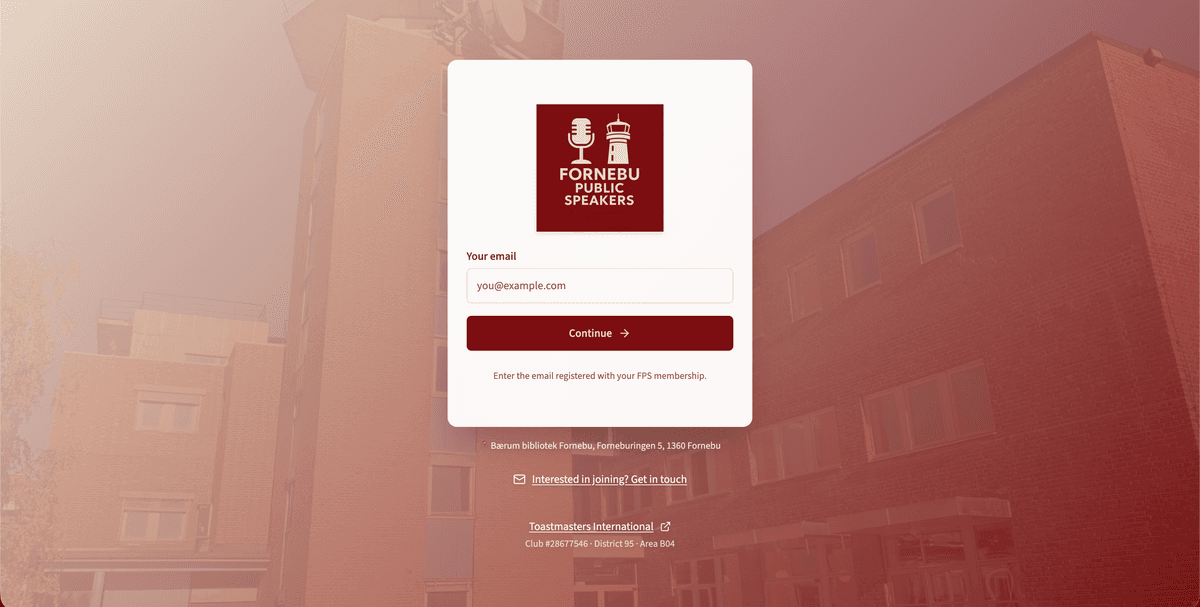
I designed and built RoleCall, a purpose-built web application that streamlines the entire meeting planning workflow.
Members can:
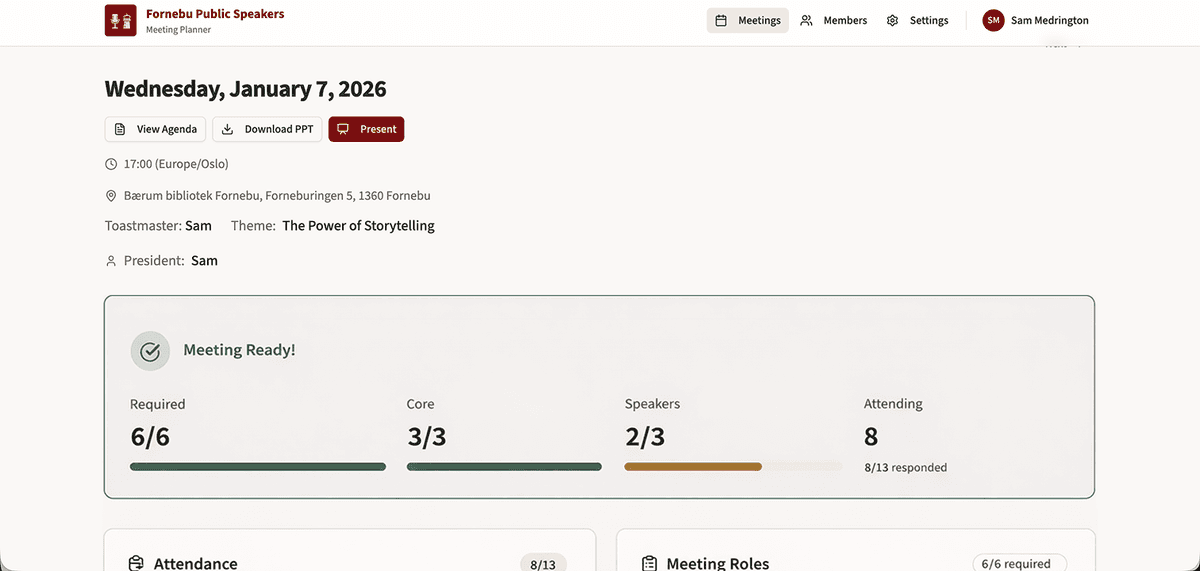
- See upcoming meetings at a glance
- Claim available roles themselves
- Track their own participation history
Admins can:
- Manage agendas from a single source of truth
- Track attendance and role distribution
- Generate agendas and slides instantly
The goal was simple: remove friction without adding complexity.
Key Features
Self-Service Role Assignment
Members browse upcoming meetings and claim available roles in real time. The app prevents double-booking and provides clear confirmation, reducing uncertainty and follow-up messages.
Smart Speech Planning
When taking a speaker role, members select their Toastmasters Pathways project from a searchable list. The app automatically applies the recommended speech duration, saving time and avoiding errors.
One-Click Agenda Generation
Admins can generate professional PDF agendas and PowerPoint presentations directly from the app. No copying between tools - everything flows from the same data.
Live Presentation Mode
A full-screen agenda view is optimised for projection during meetings, with keyboard navigation and touch-friendly controls.
Member Activity Tracking
Each member has a profile showing their role history, helping the VP Education ensure balanced participation and track progress toward awards.
Mobile-First Design
Most members interact with the app on their phones. Every screen was optimised for mobile use, with responsive layouts, touch-friendly controls, and careful handling of long names and labels.

Designing With AI - Intentionally
I used AI tools to accelerate implementation, not to make design decisions.
The interaction model, workflows, data structures, and edge cases were designed first. AI assisted with scaffolding, refactoring, and repetitive implementation tasks. This kept the system coherent while significantly reducing build time.
AI acted as an accelerator - not an author.
Technical Implementation
- Frontend: Next.js 14 (App Router), React, TypeScript
- Styling: Tailwind CSS, ShadCN UI components
- Backend: Supabase (PostgreSQL, Row-Level Security, real-time subscriptions)
- Deployment: Vercel
Design Process
I followed an iterative, real-world deployment approach, releasing frequently and gathering feedback during actual club meetings.
This led to many small but important refinements:
- Expanding unclear abbreviations ("TM" → "Toastmaster")
- Adding confirmation dialogs for destructive actions
- Standardising iconography across similar actions
The design system prioritises clarity and speed - members should be able to check meeting status in seconds, not minutes.
Results
Since launching RoleCall:
- Spreadsheets are no longer used for meeting coordination
- 100% of role assignments happen through the app
- Agenda creation time dropped from ~30 minutes to under 1 minute
- Members consistently report that the system is easy to understand and use
The success within our club led to the creation of a public demo, with interest from other clubs across District 95.
Reflections
This project reinforced several principles I now treat as non-negotiable:
- Build for real users, not imagined ones. Immediate access to actual users exposed weak assumptions quickly and prevented over-engineering.
- Mobile is the product. Treating mobile as primary would have saved time overall.
- Polish compounds. Auto-filled durations, expanded labels, and clear confirmations aren't headline features - but together they define trust.
RoleCall was a reminder that small, well-scoped tools can meaningfully improve everyday workflows when they respect users' time.