Cognite Flows is a platform for building industrial applications on top of contextualised operational data. It launched publicly in May 2026. Before it had a product, it needed three things a platform cannot launch without: applications good enough to show what the platform was for, a set of interaction patterns for everyone else to build on, and a way to review every application built on it against the same bar. I was the only designer on all three.
Quality Guidelines
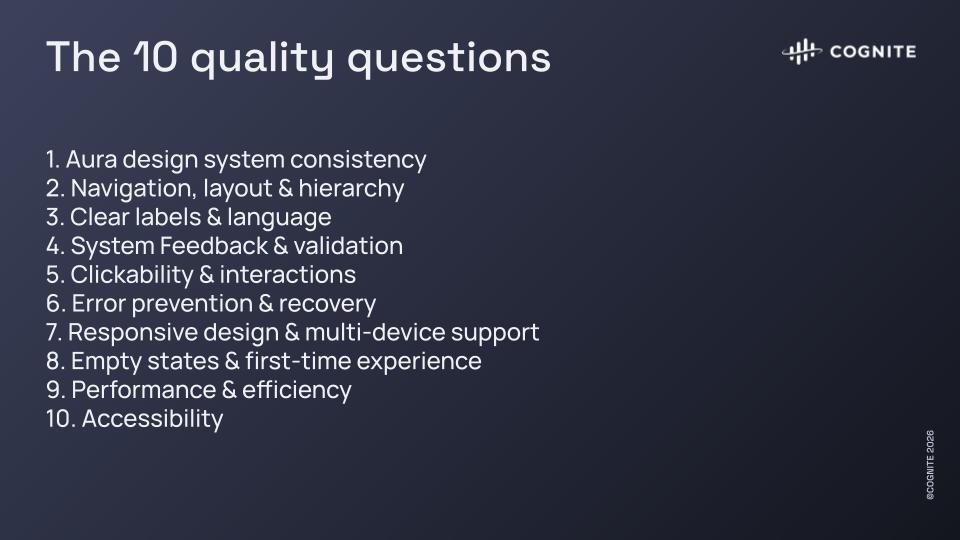
The ten design quality questions every Flows application is reviewed against.
Read the guidelines ↗(opens in new window)Analyst View
ARC Advisory Group on why Flows may be the "Industrial IDE" the factory floor has been waiting for.
Read the article ↗(opens in new window)The Challenge
A platform that lets customers and partners build their own applications has a problem that a single product does not. The platform owner no longer controls the user experience. Every application built on it carries the platform's name, runs in the same environments, and is used by the same operators, often in control rooms, on plant floors, and under real cognitive load. One badly designed application damages trust in all of them.
The usual answers are a design system, which governs components but not workflows, or a subjective review by whoever is available, which builders learn to resent. Neither protects the user. The design problem was to define what good looks like in a way that is concrete enough to be built against, objective enough to be reviewed against, and fair enough that certification never surprises the builder.
What I Did
Reference applications first
Standards written in the abstract tend to be ignored. So the interaction patterns for Flows were established by building applications, not by writing guidelines. In the months before launch I designed and built three applications that became the platform's key reference apps, used to establish its quality baseline: Production Flow for pharmaceutical manufacturing, Anomaly Detection for heat exchangers and process instabilities in energy, and Data Quality governance for industrial data trust. Each one was used by real operators or engineers, each solved a validated problem, and each established patterns that later became part of the standard: process-centric layouts, triage before investigation, pre-populated rather than suggested AI text, visible provenance for machine-generated content.
The applications did two jobs. They proved that an application built on the platform could reach production quality in weeks, which was the case the platform launch rested on. And they gave the design standard worked examples that builders could open and inspect.
An objective design review
Every Flows application must be certified before it reaches a production environment. I wrote the review process and the standard it applies. The design principle behind it is simple: eliminate reviewer subjectivity by anchoring the review on two artefacts the builder controls.
The App Brief. The builder knows their users, tasks and environment better than any reviewer. So the builder writes a brief that defines the user personas, the validated problem, and measurable success criteria. The brief becomes the contract the design is held to. The review assesses whether the application does what the brief claims, for the people the brief describes.
Ten design quality questions. Each is a concrete one-to-five rubric scored against direct evidence from the builder's screen recording and brief. They cover the heuristics that fail most often in industrial applications: design system consistency, clear labelling, error prevention, responsive layout, task completion under real conditions such as control room glare or heavy cognitive load.
Certification passes two gates. An average score of at least 3.8 across the ten questions, and no single question below 3. A score of 1 or 2 on any dimension means a workflow blocker that prevents primary task completion, and is a categorical failure regardless of the average. The rubric accounts for scope, so a read-only viewer automatically passes error prevention, and an application explicitly scoped to desktop passes responsive design if it renders cleanly on supported monitors.
Designing the review to be fair
The harder design problem was not the rubric but the relationship. A review that builders experience as a hurdle produces defensive briefs and minimal applications. So the process is built around three commitments.
- The builder is the problem authority. The reviewer's job is to verify that the design honestly serves the brief, not to redesign the application.
- Friction is the unit of review. Walkthrough videos are assessed through a task-completion lens. If a user cannot complete their task, that is the finding. Taste is not.
- Recommendations are never blocking. Anything labelled a recommendation is added value for the next iteration, separated clearly from what certification requires.
Enablement
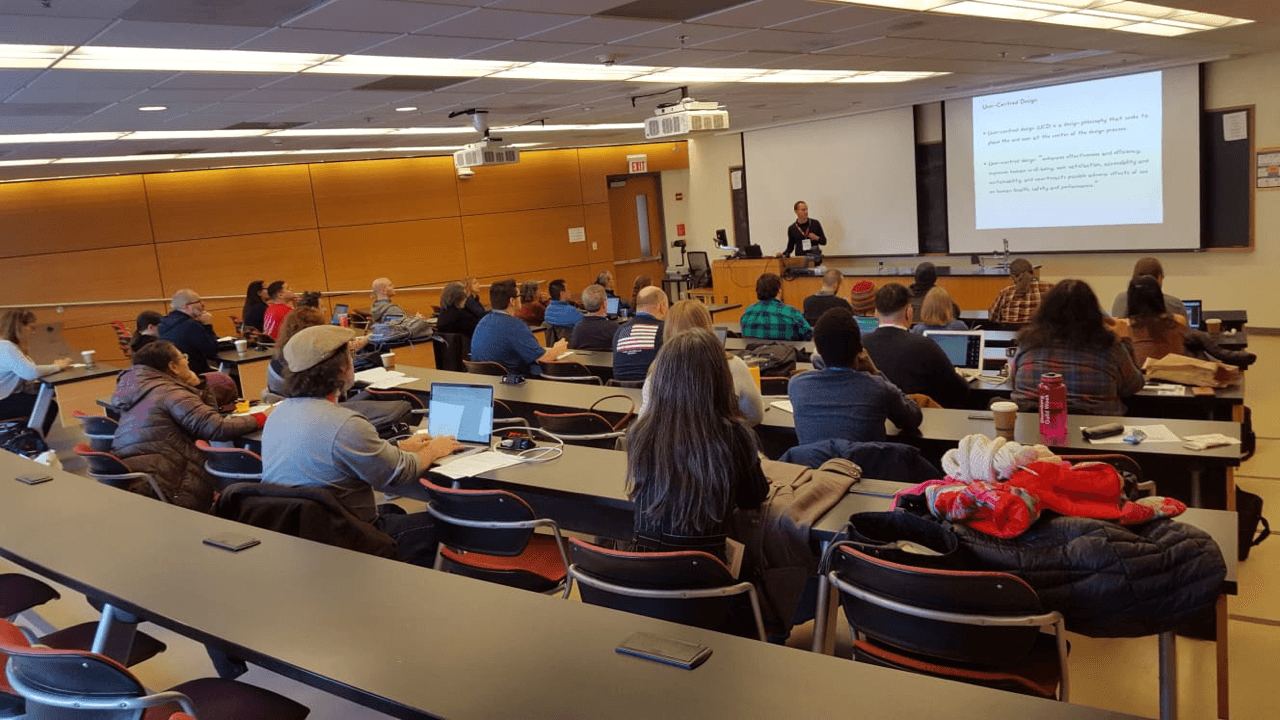
A standard only works if builders can meet it. I designed a Human-Centred Design course for Flows app builders and ran it as enablement workshops for internal teams, partners and customers, walking through the reference applications, the brief, and the ten questions, so that teams arrived at review already knowing how they would score. The course is published on Cognite Hub.
Module 2: Flows Without Flaws, the Design Lane ↗(opens in new window)
- Understanding Your User
- Tasks Over Features
- Workflow-Led Information Architecture
- Validate via Self-Assessment
- Iterate With Real Users
- Check Your Understanding
"An amazing week in Oslo at the Cognite offices, getting to grips with the new Cognite Flows and earning App Builder certification... thanks to Sam Medrington and the rest of the Flows team for their support getting certified so quickly."
Outcome
Cognite Flows launched in May 2026, described by the company as the most consequential product launch in its history, with the reference applications featured in the launch material. The design review is the quality gate for every application built on the platform by customers and partners, and the ten quality questions are published in Cognite's product documentation. The Anomaly Detection reference application went from prototype to production use in October 2026.
Key Observations
Build the standard before you write it. Guidelines derived from working applications are specific, defensible, and come with examples. Guidelines written first tend to describe an application nobody has built.
Objectivity is a design choice. Anchoring review on the builder's own brief turns an argument about taste into a check against a contract. It also makes the builder responsible for understanding their users, which is the point.
A floor matters more than an average. An application can score well overall and still be unusable because of one blocking failure. The no-score- below-3 gate catches what the average hides.
Governance is a user experience too. The builders are users of the review process. If it feels arbitrary or adversarial, the applications get worse, not better.