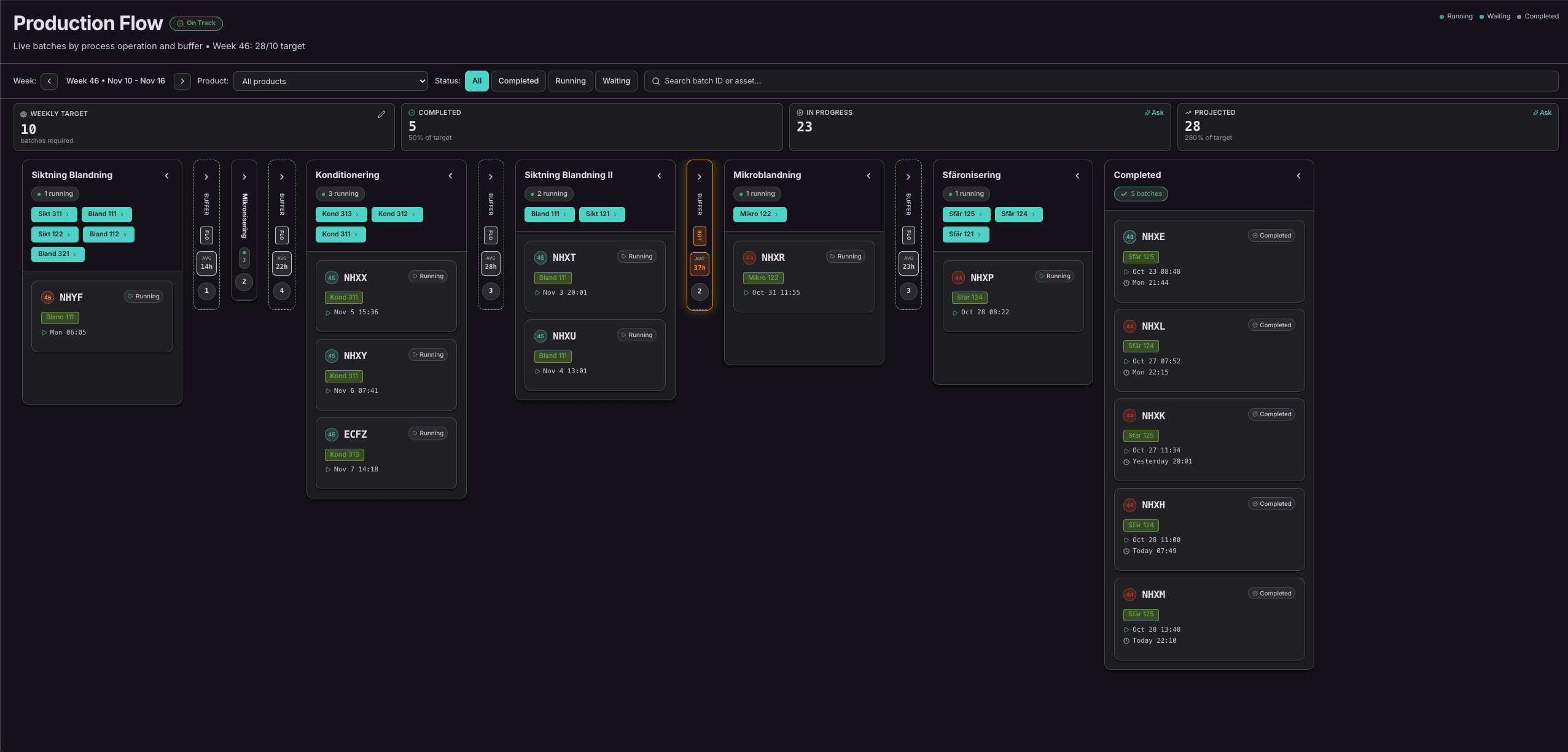
Led ethnographic research and designed production flow applications for pharmaceutical manufacturing operations at Cognite.
Interactive Prototype
Explore the live demo of the Production Flow and Maintenance Support applications.
View prototype ↗(opens in new window)The Challenge
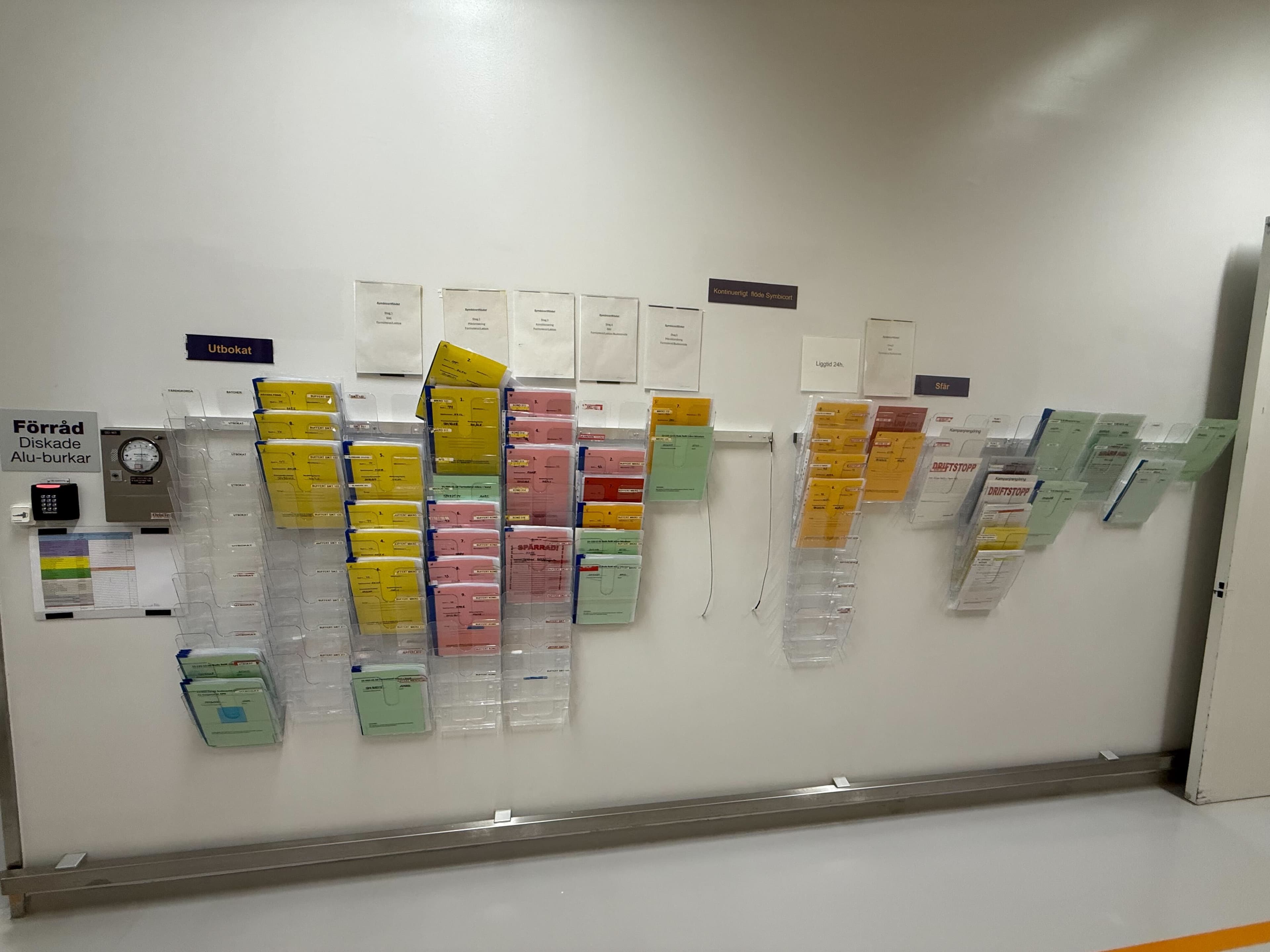
The client's manufacturing operations relied on a fragmented set of tools to understand production flow, bottlenecks, and maintenance issues. Operational insight was distributed across physical Kanban boards, static dashboards, spreadsheets, and specialist analytics systems.
As a result, operators and stakeholders struggled to answer simple but high-consequence questions:
- What is running right now?
- What is waiting, blocked, or out of specification?
- Where is flow breaking down across the process?
- Which assets require attention next?
The aim of this engagement was not to build another dashboard, but to explore whether a single, coherent operational surface could replace fragmented views and support faster, more confident decisions.
What I Did
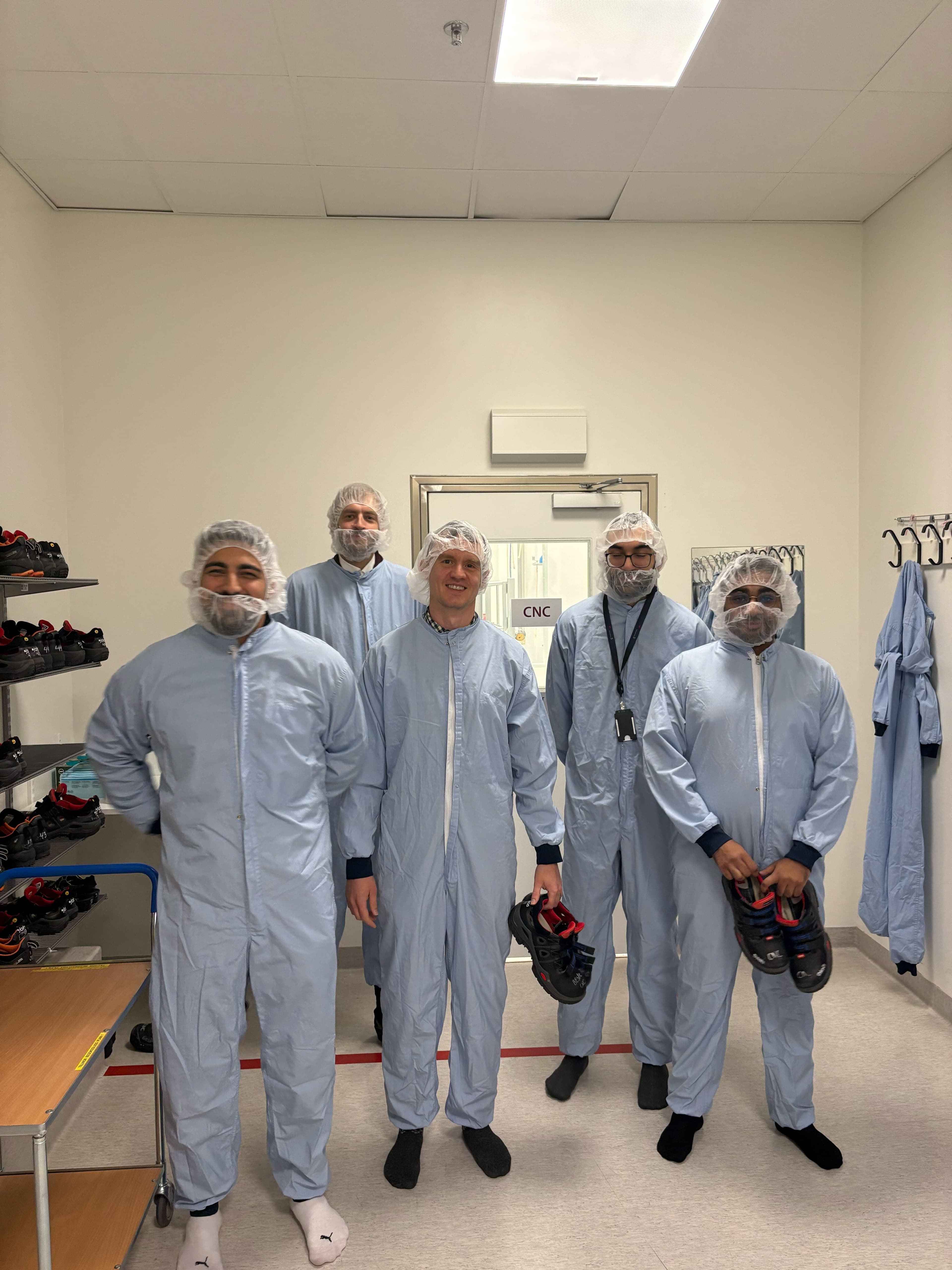
This was a three-week engagement with a major pharmaceutical company, delivered through Cognite's Value Delivery team - a small, cross-functional group comprising a product manager, subject-matter expert, CDF engineer, and myself as designer.
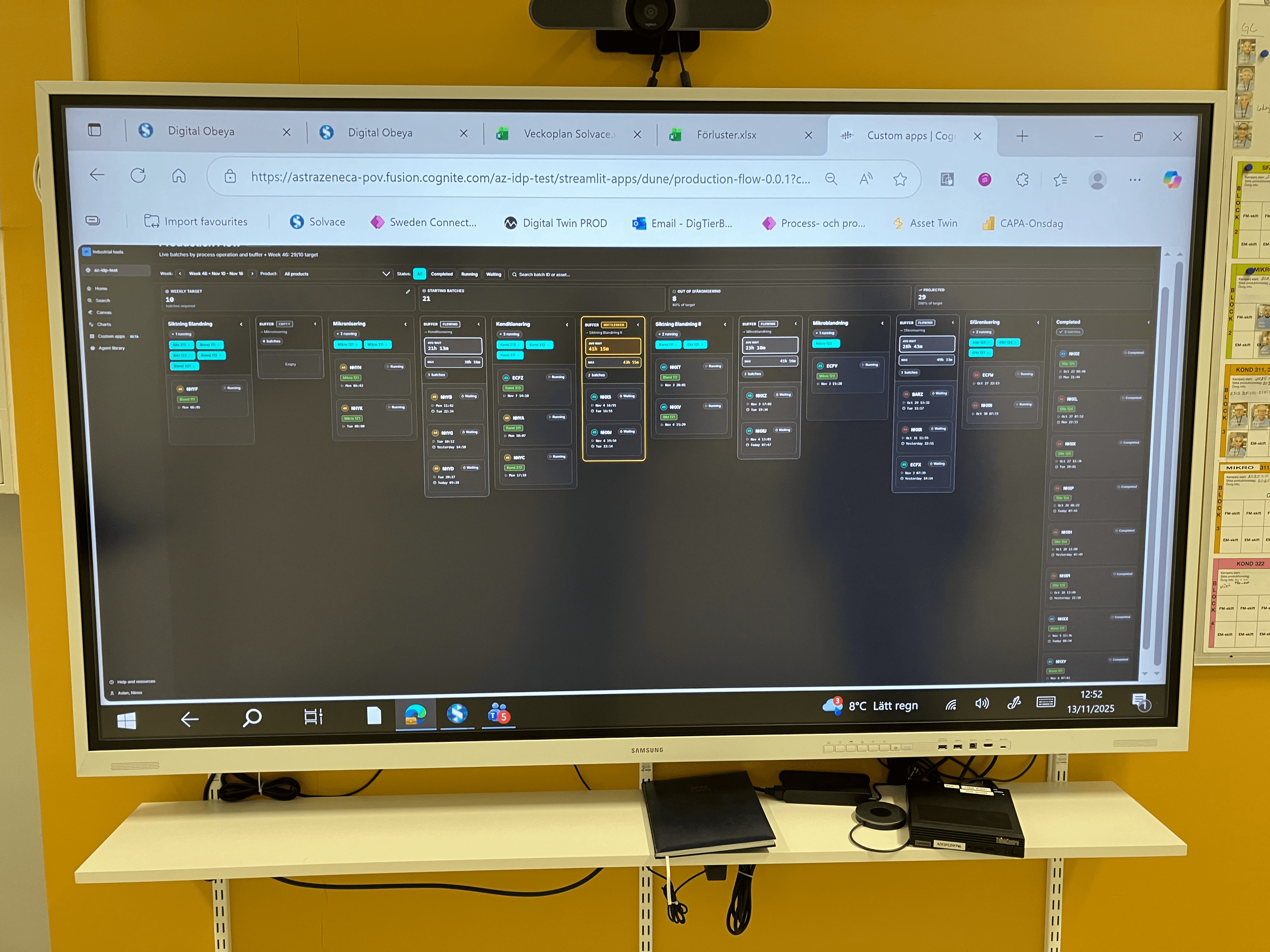
Week one: on-site ethnographic research and contextual inquiry directly with operators. By the following week, I had designed and built working prototypes of both applications -Production Flow (opens in new window) and Maintenance Support (opens in new window) - running live client data and being used by real operators on the factory floor.
I designed and built both applications in Cursor using Cognite's design system. The prototype code went straight to production - no redesign, no reinterpretation. The remaining time was spent on usability testing and iteration, both on-site and remotely.
Outcome
The Production Flow application quickly became the focal point of the engagement. Usability testing showed that operators needed fast, reliable situational awareness - not more analytics.
During on-site testing, stakeholders articulated the impact:
"90% of multiple people's time at the facility is spent looking for data in Excel. With the use cases shown, we can 'add' ~5 FTEs via efficiency gains."
"Going from slow horses to fast helicopters."
"What the Atlas AI team did in 2 days took our UX team 18 months."
The client formally decided to pivot away from fragmented dashboards and consolidate business-facing operational views within Cognite.
Design Decisions
Process-centric, not metric-centric. Ethnographic research showed operators think in terms of flow - what is running, what is waiting, what is blocked. The existing dashboards organised information around KPIs. I designed the primary view around the production process itself, with status and timing layered onto each stage. This matched operator mental models and eliminated the translation step between "what the screen says" and "what is actually happening."
Situational awareness over analytics. Early concepts included historical trend views and comparative analytics. Usability testing showed operators kept returning to the live view - they needed to know what was happening now, not what happened last week. I stripped the interface back to prioritise real-time state, surfacing history only where it directly informed a current decision.
Built in code from day one. Rather than wireframing and handing off, I prototyped directly in Cursor using Cognite's design system. This meant usability testing ran against real interaction behaviour - scroll, transition, data density - not static approximations. The same code shipped.
Feedback
"Everything you committed to was delivered with quality and speed. Your preparation and execution during customer sessions made a real difference."
"Sam brought a relentless focus on the end-user, breaking problems down to first principles. His ability to move quickly from concept to near production-grade solutions was a highlight of the project."
What I'm Proud Of
I'm proud that this work moved beyond design artefacts and into real operational use.
In a short time frame, the project progressed from ethnographic research on a factory floor to a deployed system running live data, used by operators in context. The "horses to helicopters" moment captured something important: not just faster delivery, but a fundamental change in how work was seen, discussed, and acted upon.
In high-consequence environments, good design is not about adding intelligence, but about making reality legible.